WATCH THE NEWEST EPISODE OF BRAND RETRO

#139

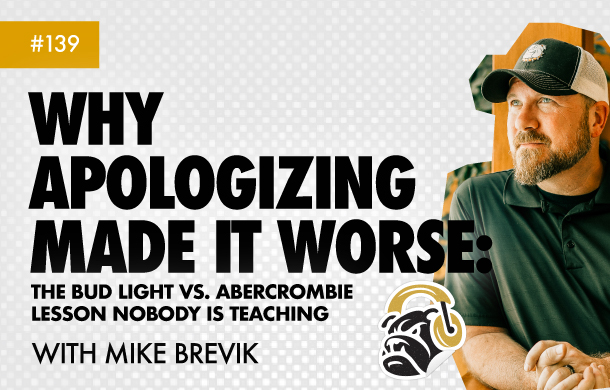
Why Apologizing Made It Worse: The Bud Light vs. Abercrombie Lesson Nobody Is Teaching

Two of America’s most recognized brands got publicly hated within months of each other in 2023. Bud Light apologized, pulled back, and lost its 22-year run as the top-selling beer in the country. Abercrombie and Fitch, once ranked the most hated retail brand in America, said almost nothing and spent seven years quietly fixing the product instead. Mike Brevik breaks down what actually separated the brand that never came back from the ones that did, and why the answer has nothing to do with crisis PR.

WHO IS THE GUEST?

In spring 2023, Bud Light and Abercrombie and Fitch each faced the kind of backlash every brand fears. Bud Light ran the crisis PR playbook to the letter, apologized, pivoted, and fired a marketing executive, and still never got its market share back. Abercrombie, once ranked the most hated retail brand in America, said almost nothing publicly and spent seven years changing everything that was actually wrong instead.
In this episode, Mike Brevik breaks down why the apology made things worse, how American Eagle used the same kind of pressure to its advantage with the Sydney Sweeney campaign, and why the brands that survive cancellation are the ones with real depth built long before the crisis ever arrives.

KEY TAKEAWAYS

  • The apology trap: when a brand retreats under pressure, fires an executive, or apologizes fast, it signals to the audience that the accusation was true. That single move helped sink Bud Light within six weeks of one Instagram post.
  • Brand depth beats crisis PR. Abercrombie survived not because of what it said during the backlash, but because of seven years of visible, unannounced product and culture change under CEO Fran Horowitz afterward.
  • American Eagle refused to apologize for the Sydney Sweeney campaign and turned the controversy into free attention that outperformed anything the brand could have bought.
  • A brand built to appeal to everyone ends up standing for no one. Bud Light’s 22 years of market share evaporated because no single group of customers felt strongly enough to stay.
  • The real test isn’t how a brand handles a crisis, it’s whether the brand built enough depth beforehand. Ask now: if your brand got canceled tomorrow, would anyone show up for it?


subscribe, share and review

To get the next episode subscribe with your favorite podcast player.

highlights

03:27-04:29 Mike explains why Bud Light's real mistake wasn't the partnership, it was panicking afterward and acting like the accusation was true.
04:45-05:14 The psychology of the apology trap: an audience's brain uses confidence as a credibility signal, and retreat reads as confirmation of guilt.
06:02-07:00 Abercrombie and Fitch in 2016 was ranked the most hated retail brand in America, with a CEO on record saying certain customers weren't welcome.
07:00-08:00 Fran Horowitz's actual strategy: no apology campaign, no rebrand, just seven years of quietly changing every product, store, and hiring practice that was wrong.
08:40-09:15 American Eagle's Sydney Sweeney campaign draws massive backlash, and the brand does not apologize, retreat, or clarify.
09:15-09:50 Sydney Sweeney rings the opening bell at the New York Stock Exchange with American Eagle leadership, turning the controversy into the campaign.
09:50-10:30 The throughline across all three brands: the ones that survive cancellation are not the ones with better crisis PR, they're the ones with brand depth built beforehand.
11:05-11:45 Mike's closing task: ask your brand right now what it would stand on if it got boycotted tomorrow, and treat the answer as this week's real work.