WATCH THE NEWEST EPISODE OF BRAND RETRO

#138

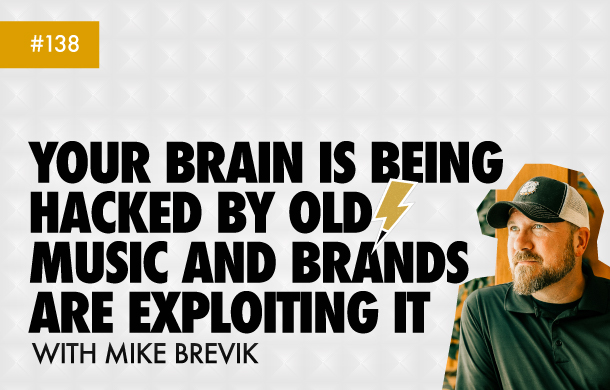
Your Brain Is Being Hacked By Old Music – And Brands Are Exploiting It

Mike Brevik goes solo to unpack why songs like Dreams, Careless Whisper, and Bye Bye Bye keep hijacking the internet decades after release. He walks through the neuroscience of why a familiar song bypasses your skepticism filter, then shows how Ocean Spray and Heinz turned that same reaction into real brand value, without ever manufacturing it.

WHO IS THE GUEST?

Mike Brevik goes solo to explain why songs from Fleetwood Mac’s Dreams to George Michael’s Careless Whisper keep going viral decades after release, and why the answer has nothing to do with music quality. He breaks down the neuroscience of nostalgia: the default mode network, the reward circuitry, and the reminiscence bump, and introduces anemoia, nostalgia for a time you never actually lived.

KEY TAKEAWAYS

  • Nostalgic songs go viral not because they’re objectively better, but because your brain encodes them as autobiographical memory, and memories bypass the skepticism filter that every ad has to fight through.
  • Anemoia, coined by writer John Koenig, is nostalgia for a time you never lived. It means a brand’s best-era nostalgia can now reach people who weren’t even alive to experience it.
  • The reminiscence bump explains why songs from your teens and twenties hit hardest: that’s when your brain forms the most identity-shaping memories of your life.
  • New music isn’t worse than old music. It just hasn’t had decades to attach itself to your life yet. The gap is timing, not quality.
  • You cannot manufacture an authentic nostalgic moment, but you can build the conditions for one and amplify it when it happens, as Ocean Spray and Heinz both proved.

subscribe, share and review

To get the next episode subscribe with your favorite podcast player.

highlights

01:26-02:34 Anemoia gets its definition: nostalgia for a time you never actually lived, and why it changes who a brand's nostalgia can reach.
04:15-05:12 The two brain systems that fire together when a song hits: the default mode network and the reward circuitry.
05:48-06:13 University of Barcelona researchers confirm dopamine release from music is causal, not coincidental.
06:13-07:03 The reminiscence bump explains why songs from your teens and twenties hit harder than anything new.
07:03-08:15 Mike answers his own opening question: new music isn't worse, it just hasn't had time to attach itself to your memories yet.
08:15-09:47 The full Ocean Spray and Nathan Apodaca story, and how a broken-down car and a longboard outperformed an entire marketing budget.
10:33-11:34 Heinz's Love Lid case study: building around behavior that's already there instead of manufacturing something new.
11:34-13:07 The three-part framework for building your own version of the nostalgia economy.

EPISODE RESOURCES